
A Different Kind of Phishing: Wi-Fi at a Lakeside
How we brought reliable, secure Wi-Fi to a remote Welsh fishery and campsite with no decent broadband, using Starlink, point-to-point links, and proper VLANs.
- Wi-Fi
- Case Study
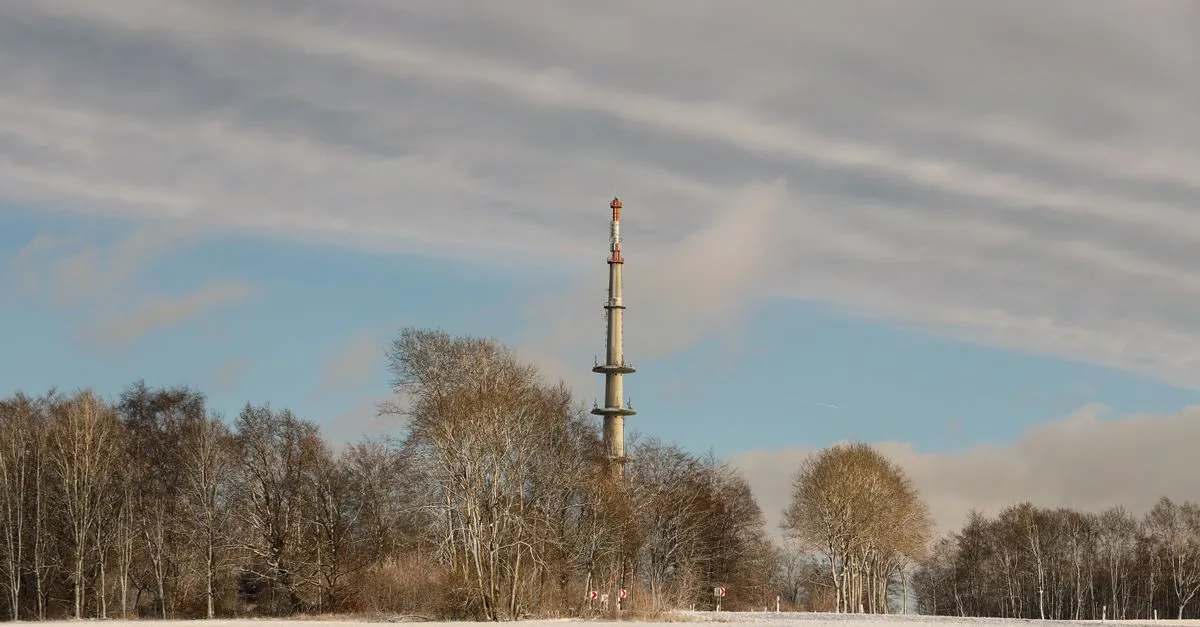
Not all of our projects happen in tidy offices. This one took us out to a fishery, cafe, and campsite tucked into the Welsh countryside, where the only “phishing” anyone cared about involved a rod and a quiet lake. The challenge was a familiar one in rural North Wales: how do you deliver reliable, secure Wi-Fi across a large site when there is barely any decent broadband to begin with?
Here is how we did it, and what it shows about designing networks for genuinely difficult settings.
The site and the problem
The owners run a small operation, a couple of staff, with a cafe and living space, camping grounds, and several fishing lakes spread across the land. As the place got busier, patrons increasingly expected to get online, and the existing setup simply could not cope.
What they had inherited was a mess: two separate, slow satellite connections shared across three locations, stitched together with a pile of Wi-Fi boosters, each broadcasting its own network name. Guests had to keep reconnecting as they moved about, and the satellite links were unreliable at the best of times. The owner wanted something simple, robust, and secure that would cover the cafe and living space, the campsite, and the lakes themselves.
The challenges we were up against
The location made things genuinely hard:
- No fast broadband. At the time, nothing faster than ADSL was available by cable, and even that was slow. Satellite was effectively the only way to get a decent uplink to the site.
- Almost no line of sight. Hills and dense trees blocked the view between the three areas we needed to connect, and there was nowhere high or central enough to put up a mast.
- Very few power points. The spots with mains power rarely lined up with the spots that had a usable line of sight, which limited where we could place equipment.
On top of that, the Starlink hardware we wanted to use was, at the time, perpetually out of stock on the adapter that would have let us cable it straight into our own network. We had to find a way around that too.
Our approach
The brief was simplicity, so that drove every decision. We advised the owner to drop the two old satellite contracts and move to a single Starlink dish, mounted on the cafe roof, which immediately delivered speeds far beyond anything the old setup managed.
For the network itself we wanted just three wireless networks across the whole site:
- One secure network for guests and patrons, the same wherever they roamed.
- One separate network for staff.
- One isolated network purely for the card machines, to help meet card payment security requirements.
To deliver that we chose Ubiquiti equipment for its excellent point-to-point links and access points, paired with a DrayTek router for its solid configuration and strong VLAN support. Putting each network on its own VLAN keeps all the traffic separate and secure, and lets us apply traffic shaping so that one person streaming video cannot drag the connection down for everyone else.
Because the Starlink adapter was out of stock, we got creative: we bridged the Starlink’s own Wi-Fi into the DrayTek’s internet port using an access point in bridge mode. Given Starlink’s speed, there was no meaningful loss doing it this way, and it kept the project moving.
How we covered the whole site
The clever part was beaming the connection across the land despite the hills and trees. By erecting a four-metre pole at a carefully chosen spot, with a clear line of sight to both the cafe and the far side of the campsite, we used three sets of point-to-point links to carry the Starlink connection over 300 metres and around a hill.
Coverage then came from outdoor and indoor access points:
- The cafe and living space got three indoor access points, cabled back to a power-over-Ethernet switch and the main comms cabinet.
- The four-metre pole carried an outdoor access point covering roughly an 80-metre radius across the campsite and lakes.
- The shower block on the far side took another outdoor access point, covering a slightly smaller area because of trees and the lie of the land, but enough to keep most people connected.
We finished with three separate networks on three VLANs, letting people and devices roam freely while staying isolated from one another, with extra protections on the guest network and traffic shaping to keep things fair. We also set up a secure remote connection so we can log in to diagnose any issues without driving out to site.
The outcome
The owner was delighted, and the system has run with very few hiccups. The main quirk is the location itself: power dips are common out there, which can knock the point-to-point links offline. We solved that by enabling a built-in watchdog that automatically reboots the units if they stay disconnected for more than five minutes. Since then the setup has weathered every season and keeps staff, anglers, and campers connected across the whole site.
There is a nice postscript, too. Full-fibre broadband has since reached the area, so in due course we will move the site off Starlink and simplify the setup even further, a reminder that the rural connectivity picture in Wales keeps improving.
What this shows
Difficult sites are where network design really earns its keep. A box of boosters from a shop was never going to cover lakes, woodland, and a campsite, but careful planning, the right kit, and proper network separation absolutely can. If you would like to understand the wired-versus-wireless trade-offs behind a project like this, our guide to Wi-Fi vs Ethernet is a good companion read.
If you have a tricky site of your own, whether it is a rural business, a sprawling yard, or a building that wired internet seems to hate, our Wi-Fi, networks, and cabling service exists for exactly these jobs. A good first step is our free IT review, which includes a look at your connectivity and where it could be better. You are always welcome to get in touch for a no-pressure chat about what is possible at your site.
Want this checked for your own business?
Book a free IT review, a straightforward, no-obligation review of where your IT stands.
Book your free IT review